01Capture the request
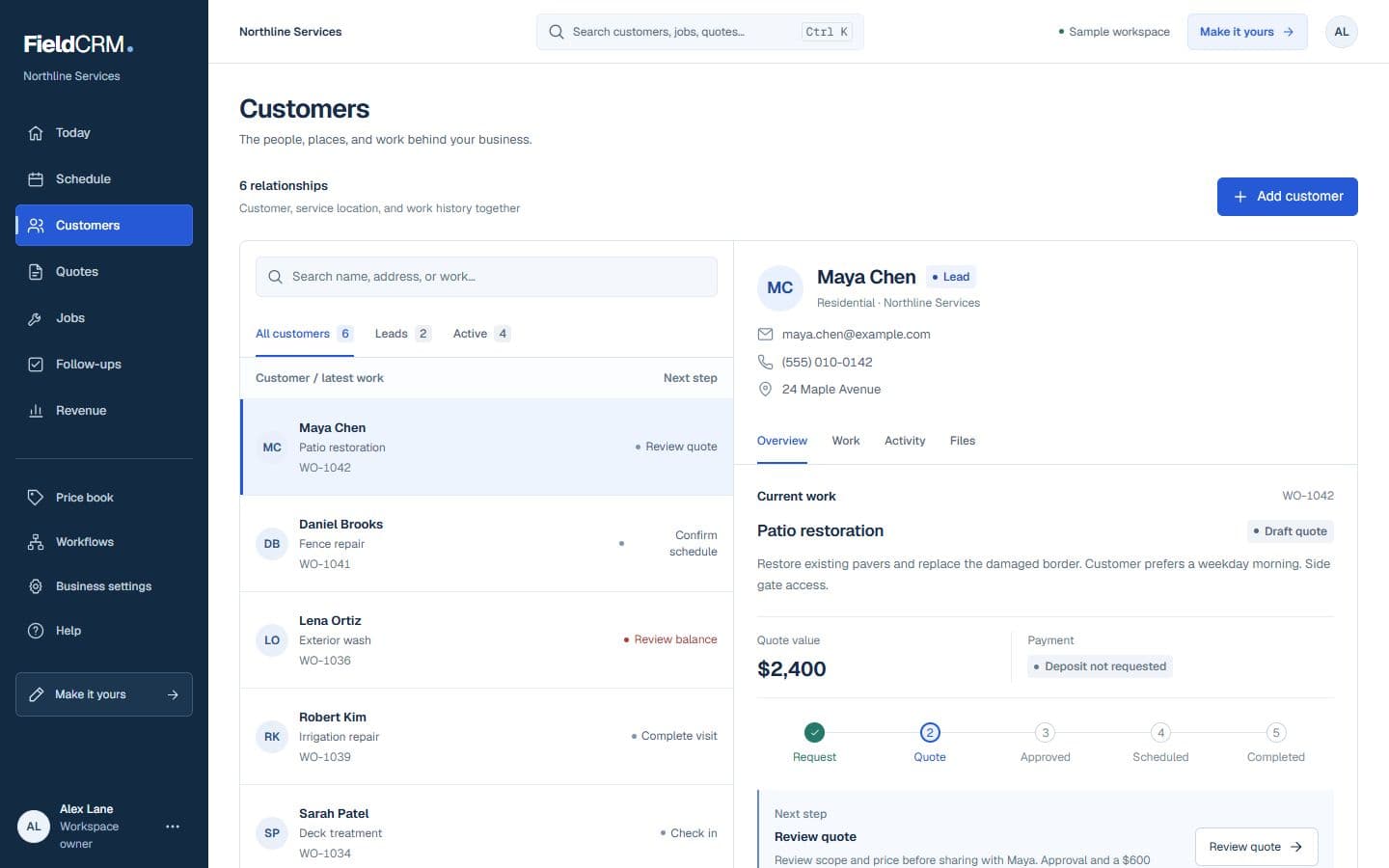
Record the service location, affected fixture or system, symptoms, when the problem started, active water or damage, shutoff status, access, occupancy, prior repairs, and customer photos. Distinguish an emergency request from ordinary service and state when pricing requires on-site diagnosis. Never use intake software as a substitute for safety instructions or professional assessment.
02Price and get approval
Build the estimate with diagnostic or trip charges, labor, fixtures, parts, permits, access work, disposal, and clear repair or replacement options. Document assumptions about concealed conditions and customer-supplied materials. Keep the accepted option and any later change approval visible so the job does not drift from the customer's decision.
03Deliver and follow through
Schedule the plumber with location, symptoms, shutoff, access, prior-history, and approved-scope notes attached. Record diagnosis, parts, work performed, testing, photos, exceptions, customer instructions, payment, and warranty context. Create a follow-up for ordered parts, reinspection, restoration by another trade, recurring maintenance, or unresolved symptoms.